

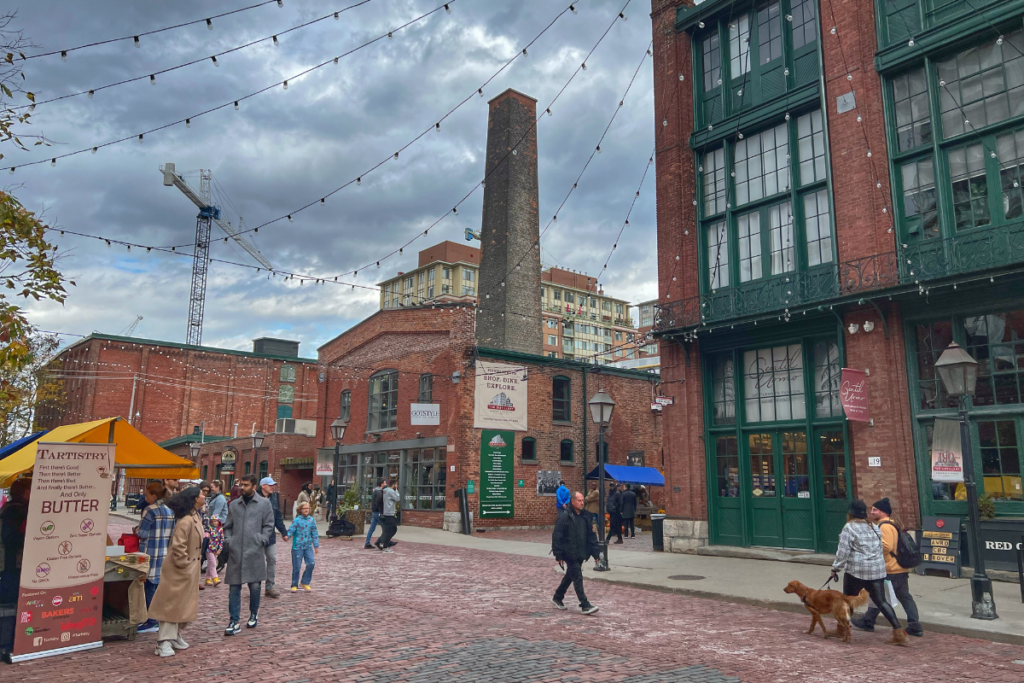
Toronto’s Distillery District is a must-visit destination for anyone interested in history, architecture and the alluring stories of the booze trade. Once home to the largest distillery in the British Empire, this beautifully preserved area now thrives with art galleries, boutiques, restaurants and event spaces—all set within over 40 Victorian-era industrial buildings.
Located just east of downtown Toronto, the Distillery District is a unique fusion of 19th-century charm and 21st-century creativity. Whether you’re a history buff, a food lover, or simply looking for a scenic stroll, the Distillery District offers one of the most memorable historical experiences in Toronto.
The History of the Distillery District
The story of the Distillery District begins in 1832, when British immigrants William Gooderham and his brother-in-law James Worts founded a milling business near the Toronto waterfront. Tragically, Worts passed away only two years later in 1834, and his death is somewhat of a mystery. His body was found at the bottom of a well on site and many believe he was overcome with the grief of recently losing his wife during childbirth – however, no one is completely sure what happened.
Gooderham continued on and opened a distillery on-site in 1837, using leftover grain mash from the mill to produce spirits—a common practice of the time. Eventually, Worts’ son James and Gooderham’s son George joined the business, forming Gooderham & Worts, a name that would become iconic in Canadian distilling history.
The Rise of a Whisky Empire
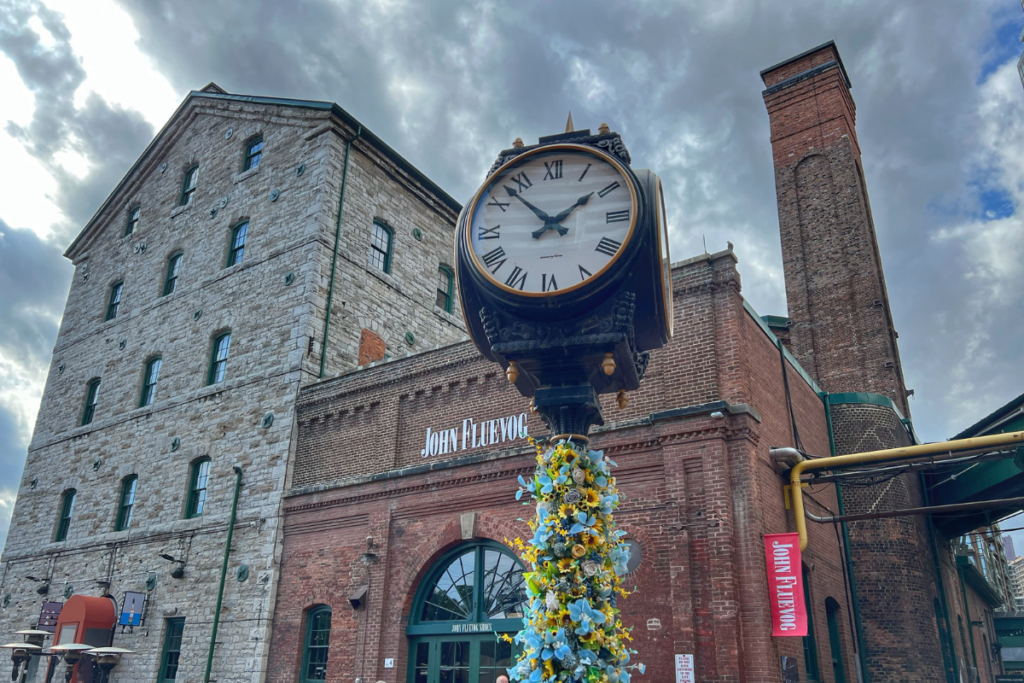
The mid-19th century saw explosive growth. In 1861, the partners opened the Stone Mill and Distillery, drastically increasing their production capacity. At its peak, the company was producing over 2 million gallons of whisky each year. For a while, Toronto’s distillery district was the largest in the British Empire and at one point, was even the largest in the world.
Whisky production continued on into the 20th century however, along with the rest of world, things came to a halt during World War I with the beginning of Prohibition in Canada.
Prohibition and a Changing Industry
While the story of Prohibition in the United States is well known, Canada also went through its own version. The origins of Canadian Prohibition began with the temperance movement in the 19th century, which promoted the belief that the consumption of alcohol was a key contributor to many of society’s problems. Proponents of the temperance movement often advocated for either extremely moderate consumption, or the total ban of alcohol.
In 1878, the Canada Temperance Act was passed which gave local governments control over alcohol laws and ultimately, the option to ban it. Prince Edward Island was the first province to ban alcohol in 1901, however the other provinces followed suit with the arrival of the First World War. During the war, Prohibition was seen as an act of patriotism, as the country focused on war efforts.
During World War I, Gooderham & Worts turned over the use of the distillery to the British government. The site was used to make ketone and acetone, which were key ingredients used in explosives. After the war, the provinces slowly repealed the Prohibition Laws, but Ontario was one of the last, only repealing in 1927. This made carrying on business difficult for Gooderham & Worts and they ended up selling the distillery. The business eventually acquired Hiram Walker’s Sons, becoming Hiram Walker-Gooderham & Worts. Eventually, most of the whisky production moved to Windsor, where it remains today.
The last whisky was produced in Toronto’s Distillery District in 1957. Afterwards, rum and industrial alcohol became the focus of production, until 1987 when the last alcohol was produced.
The Transformation into a Cultural Hub
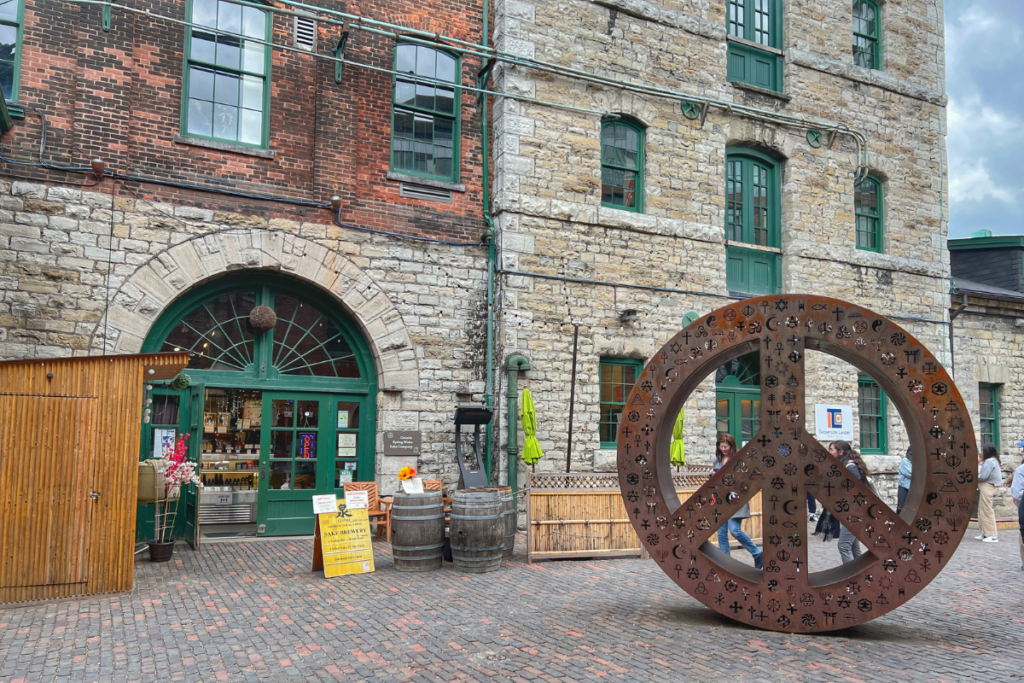
In the early 2000s, the owners of the site decided to renovate the properties and transform the area into a hub for arts and culture and in 2003, the Distillery District officially reopened.
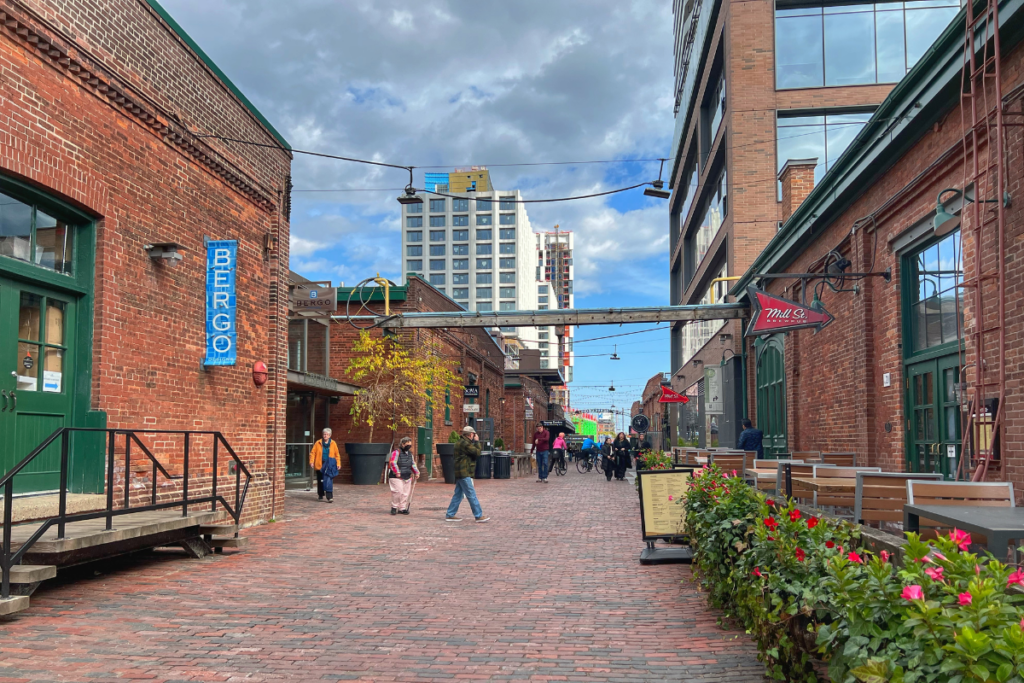
Today, the district is home to over 40 heritage buildings, making it one of the largest and best-preserved collection of Victorian industrial architecture in North America. Restoration efforts focused on preserving the site’s unique charm while bringing new life through galleries, artisan shops, restaurants and more.
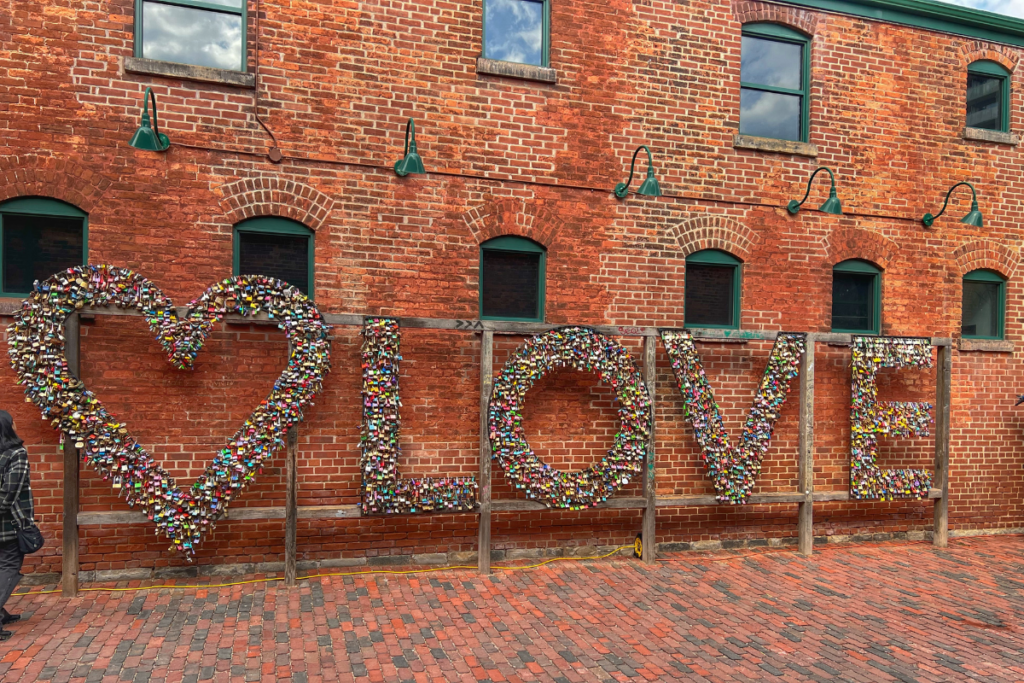
Things to Do in Toronto’s Distillery District
There’s no shortage of activities in the Distillery District. Whether you’re planning a romantic evening, a cultural outing, or a weekend wander, here are some top things to do:
1. Explore Art Galleries and Studios
The district is home to several small galleries and artist studios. Check out Corkin Gallery, Thompson Landry Gallery, or the Arta Gallery to browse contemporary Canadian and international art.
2. Shop Local Boutiques
Support local creators at shops selling handcrafted goods, vintage fashion, gourmet food, candles and jewelry. Personally, I love browsing Yummi Candles…their array of candles are perfect for any season!
3. Dine at Award-Winning Restaurants
The Distillery District offers some wonderful dining in Toronto. El Catrin Destileria serves up flavourful Mexican dishes in a vibrant setting, while Cluny Bistro offers French-inspired cuisine. For a quick bite or afternoon treat, stop by Balzac’s Coffee Roasters, located in a restored 1895 pump house.
4. Visit Spirit of York
Bringing distilling back to its roots, Spirit of York Distillery Co. produces premium spirits right on site. Stop by for a tasting or a cocktail and learn about the modern revival of Toronto’s spirits scene.
5. Catch a Performance
The Young Centre for the Performing Arts is home to the acclaimed Soulpepper Theatre Company, which stages a wide variety of shows throughout the year. Be sure to check the event schedule when you plan your visit.
6. Enjoy Seasonal Events
The district comes alive with special events throughout the year. The most famous is the Distillery Winter Village, a magical holiday market that runs from mid-November through to early January.
Practical Tips for Visiting the Distillery District
How to Get There
The Distillery District is located east of downtown Toronto, at Mill Street and Trinity Street. It’s about a 5–10 minute drive from Union Station (depending on traffic). The subway does not go to the Distillery District but you can get there by either bus or streetcar. It’s also a nice, approximately 30-minute walk from Union Station if the weather is nice.
Opening Hours
Shops and restaurants are generally open:
- Monday–Thursday: 10 AM – 7 PM
- Friday–Saturday: 10 AM – 8 PM
- Sunday: 11 AM – 7 PM
Keep in mind that opening times may vary by business or by time of year. Check the official Distillery District website for up-to-date information.
Admission
There’s no admission fee to enter the Distillery District. It’s free to explore the area on foot. Some special events—like the holiday market—require tickets during peak times.
Best Time to Visit
The district is enjoyable year-round, but the experience varies by season.
- Winter: Visit during the holiday season for twinkling lights, warm drinks and festive cheer.
- Spring & Summer: Ideal for patio dining and guided tours.
- Fall: Enjoy a quieter atmosphere with beautiful autumn colours.
Nearby Historical Attractions
If you’re interested in more of Toronto’s history, there are several nearby spots worth visiting:
- St. Lawrence Market (15-minute walk): One of the oldest markets in Canada, operating since the 1800s.
- Toronto’s Old Town: Includes the iconic Flatiron Building, St. James Cathedral and Old City Hall.
- Hockey Hall of Fame: Offers a must-see experience for sports fans, celebrating Canada’s beloved national game with interactive exhibits and iconic memorabilia.
Overall, the Distillery District is more than just a pretty place to visit—it’s a cornerstone of Toronto’s heritage and an enduring symbol of the city’s ability to reinvent itself. Whether you’re sipping craft gin in a repurposed Victorian building or browsing local art, you’re taking part in a living legacy.
Don’t miss the chance to walk these historic streets and see how Toronto’s past and present come together.