Located in the historic Smithfield area of London, St Bartholomew’s Gatehouse is one of the city’s most impressive, and rare, surviving examples of Tudor architecture. This beautifully preserved gatehouse leads into St Bartholomew the Great, a church founded in 1123 and one of the oldest religious buildings in the City of London.
Together, St Bartholomew’s Gatehouse and church offer visitors a fascinating glimpse into medieval and Tudor London and are well worth adding to any historical walking route through the city.
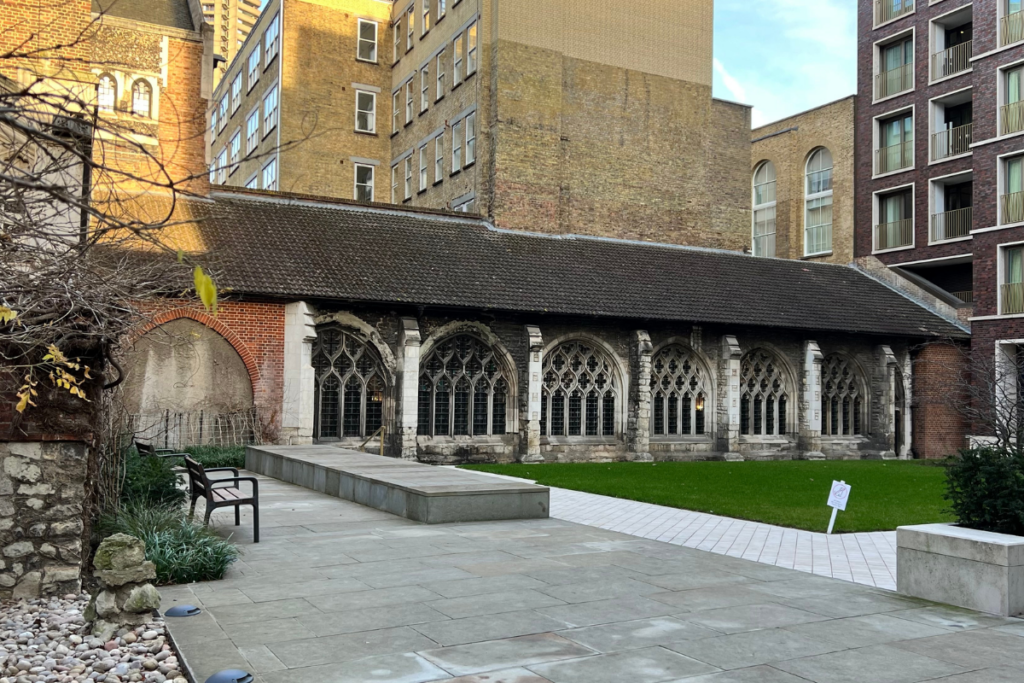
St Bartholomew the Great Church
With over 900 years of history, St Bartholomew the Great is one of the oldest churches in London. It was founded in the 12th century as an Augustinian priory by Rahere, a courtier of King Henry I.
According to legend, Rahere became ill while on pilgrimage in Rom and Saint Bartholomew appeared to him in a vision and asked him to establish a church in Smithfield in his name. Rahere vowed that if he survived, he would also create a hospital for the poor back in London. True to his word, he founded both the church and hospital upon his return.
Over the centuries, the church underwent significant changes. The most dramatic occurred in 1539, when the nave was destroyed during the Dissolution of the Monasteries under Henry VIII. St Bartholomew the Great later became a parish church under Queen Elizabeth I and began to be restored during the 19th century.
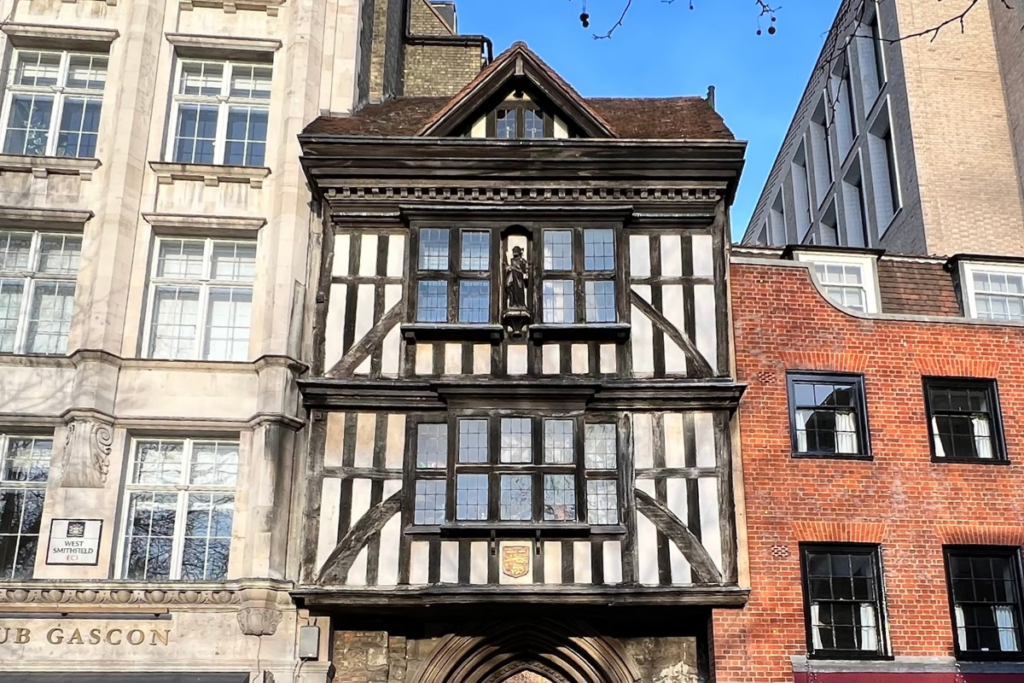
St Bartholomew’s Gatehouse
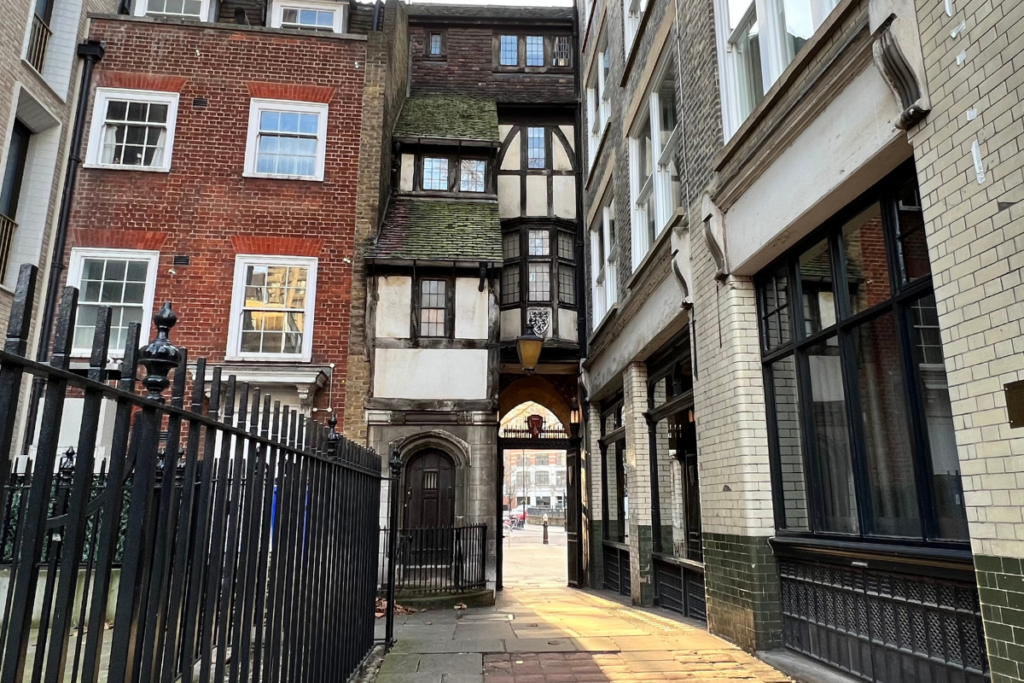
One of the most striking features of the site is St Bartholomew’s Gatehouse, believed to date from around 1595. This timber-framed Tudor building was constructed over an original 13th-century entrance to the church’s nave and consists of two main floors with a small attic above.
Remarkably, the gatehouse survived the Great Fire of London in 1666, making it one of the rare surviving Tudor structures in the City. In the 18th century, a Georgian façade was added and the building was used as a shop for many years.
During World War I, the gatehouse was damaged by a German Zeppelin bomb, which led to the rediscovery of the original Tudor structure beneath the Georgian exterior. Following careful restoration, the gatehouse once again stands as a distinctive and atmospheric landmark in Smithfield.
Visiting St Bartholomew’s Gatehouse Today
Today, visitors can explore both St Bartholomew the Great church and its historic gatehouse. Walking through the arch of the gatehouse is a memorable experience and feels like stepping back into medieval London.
The church is free to visit, although donations are encouraged to support the upkeep of this important historic site. I also recommend checking the official website in advance, as guided tours are sometimes available and offer deeper insight into the church’s remarkable past.
Key Information for Visiting St Bartholomew’s Gatehouse
Where is St Bartholomew’s Gatehouse located?
St Bartholomew the Great church and gatehouse are located in Smithfield, within the historic City of London.
How do you get to St Bartholomew’s Gatehouse?
The easiest way to reach the site is by taking the London Underground to either Farringdon or Barbican station, both just a short walk away.
If you’re already exploring the City of London, the gatehouse is about an 8-minute walk from St Paul’s Cathedral.
Is there an entry fee?
There is no charge to visit either the church or the gatehouse. Donations are welcome and help preserve this historic site.
What historic sites are nearby?
Smithfield is one of London’s many historic areas. Nearby attractions include:
- Smithfield Market
- The Elms, a historic execution site associated with figures such as William Wallace
- The wider City of London, home to landmarks including St Paul’s Cathedral