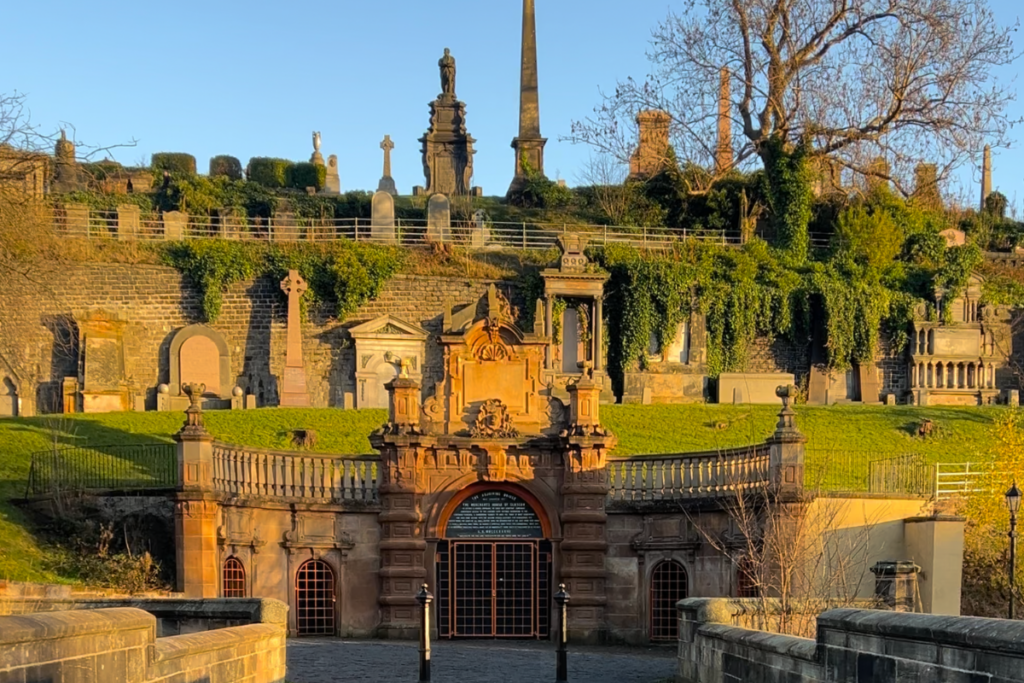
Sitting high above the city, the Glasgow Necropolis is one of Scotland’s most atmospheric Victorian cemeteries. This 37-acre cemetery dates back to the early 19th century and is the final resting place of around 50,000 Glaswegians. Overlooking Glasgow Cathedral and the city skyline, the Necropolis is both a peaceful green space and a fascinating window into Glasgow’s social, industrial and religious history.
Today, the Glasgow Necropolis is one of the city’s most compelling historical attractions, drawing visitors who want to explore monumental Victorian architecture, learn about influential figures from Glasgow’s past, and enjoy some of the best panoramic views in the city.
History of the Glasgow Necropolis
The 19th century Victorian era marked a significant shift in attitudes toward death. Rather than viewing mortality with fear, Victorians increasingly embraced remembrance, symbolism, ceremony and a more uplifting attitude that characterizes the period. Death became a public and communal experience, reflected in elaborate funerals and impressive memorial architecture.
During this period, many rapidly growing cities faced overcrowded burial grounds. This led to the rise of garden cemeteries, designed as landscaped spaces outside city centres that combined burial grounds with park-like surroundings. They dealt with overcrowind, while still being close enough for families to visit and pay respects to their loved ones.
One of the most famous examples of a garden cemetery is Père Lachaise Cemetery in Paris, which opened in 1804. Influenced by the French cemetery’s opening, other cities across Europe — including Glasgow, then known as the Second City of the Empire — began to create similar burial spaces.
From Fir Park to Cemetery
The land that became the Glasgow Necropolis was originally owned by the Merchant’s House. In the early 19th century, it functioned as a public park known as Fir Park. The transformation into a cemetery began in 1825, setting the stage for what would become one of Scotland’s most significant burial grounds.
That same year, foundations were laid for a monument to John Knox, the 16th-century Protestant reformer who played a key role in the Scottish Reformation. Although Knox is not buried in the Necropolis, his statue attracted considerable public interest and helped establish the site as a place of national importance.
Inspired by Père Lachaise, the Merchant’s House soon recognised the land’s suitability for a grand cemetery. The first burial took place in 1832, and the Necropolis has remained interdenominational ever since.
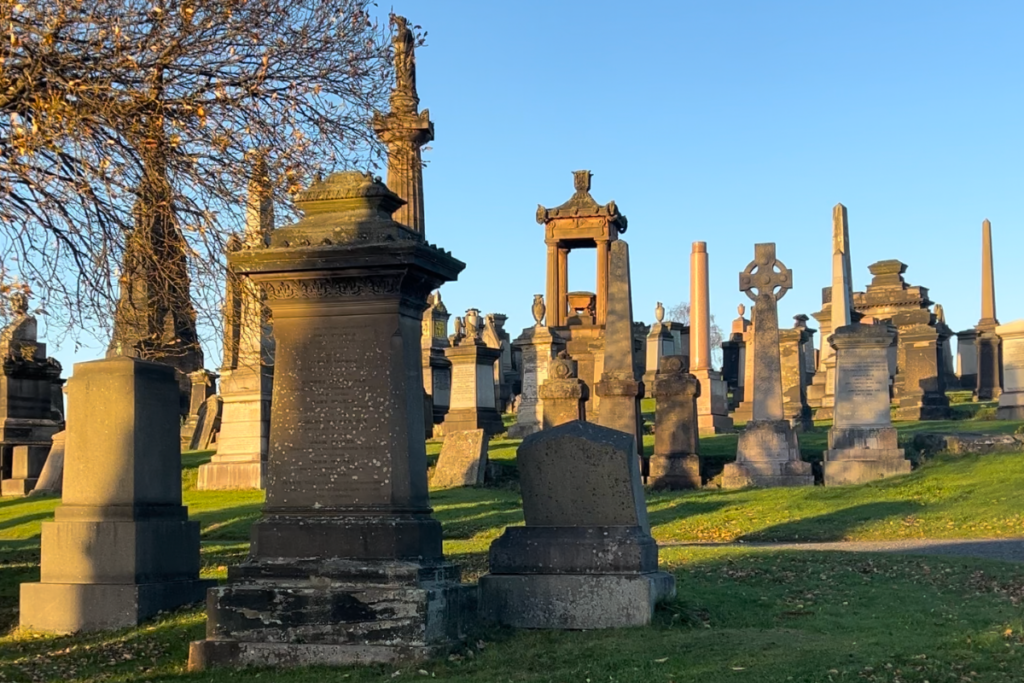
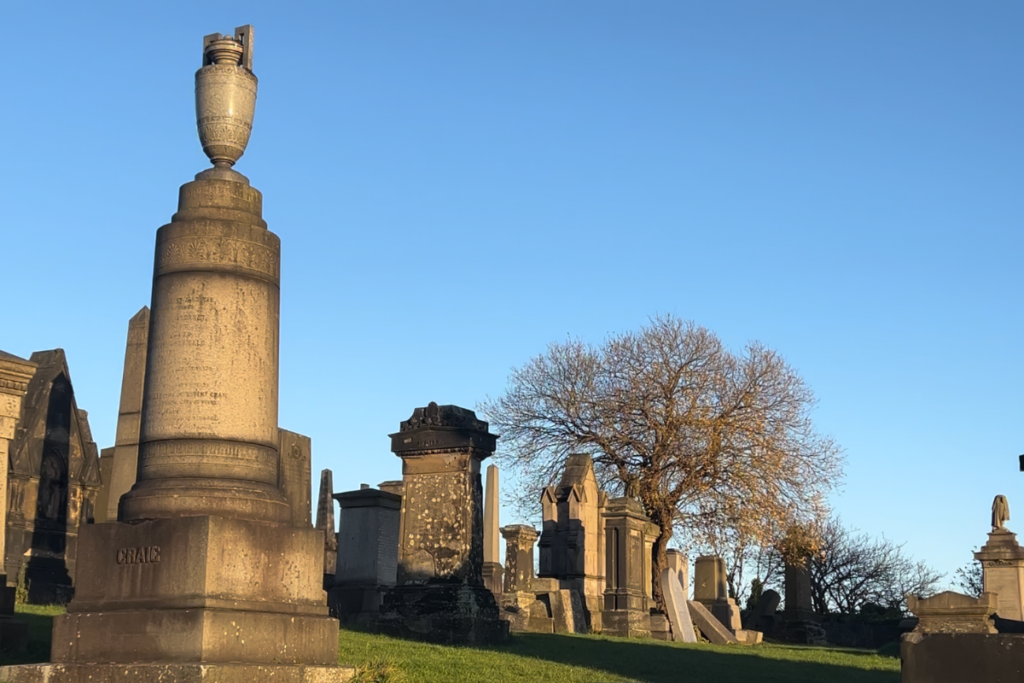
Today, the Glasgow Necropolis contains approximately 3,500 tombs and monuments, with both marked and unmarked graves. By the late 19th century, it had already become a popular tourist attraction — with thousands of visitors recorded towards the end of the 19th century.
Notable Burials in the Glasgow Necropolis
While the Glasgow Necropolis may not house the same international celebrities as some European cemeteries, it is filled with figures who played vital roles in shaping Glasgow’s cultural, industrial and intellectual life.
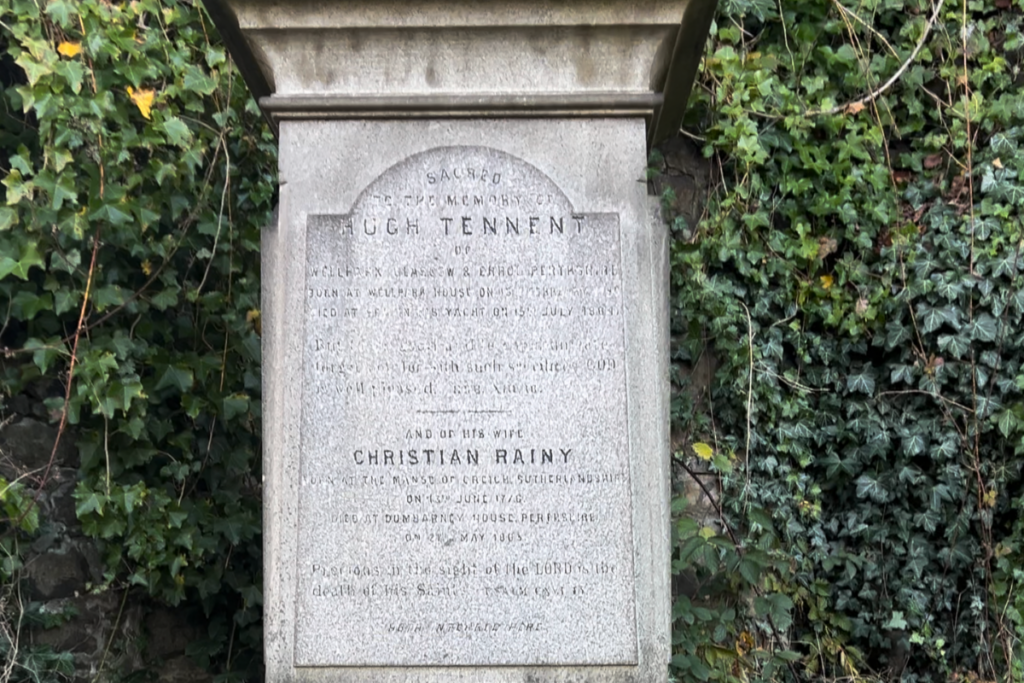
Hugh Tennent
Founder of one of Scotland’s most famous beveraqges, Tennent’s Lager, Hugh Tennent began brewing Tennent’s in 1885. He is buried alongside his father and brother, with their graves fittingly facing the nearby Wellpark Brewery.
Charles Tennant
A Scottish chemist and industrialist, Charles Tennant is best known for discovering bleaching powder, a major industrial breakthrough that transformed textile production.
Isabella Elder
A highly influential Glaswegian philanthropist, Isabella Elder was a passionate supporter of women’s education and social welfare. She funded Elder Park and the Elder Park Library in Govan, leaving a lasting legacy across the city.
William Miller
Poet William Miller is remembered for writing “Wee Willie Winkie”, a poem that became a beloved children’s bedtime rhyme.
William Thomson, 1st Baron Kelvin
One of Scotland’s greatest scientists, Lord Kelvin taught at the University of Glasgow for over 50 years. He made foundational contributions to physics and engineering, including the creation of the Kelvin temperature scale. His name lives on across Glasgow, from Kelvingrove Park to the Kelvingrove Art Gallery and Museum.
William Burns
Historian, lawyer and nationalist William Burns was instrumental in campaigning for the construction of the Wallace Monument in Stirling, attending the laying of its foundation stone in 1861.
Visiting the Glasgow Necropolis: Practical Information
How to Get to the Glasgow Necropolis
The Glasgow Necropolis is located just east of Glasgow City Centre.
- By train: The closest station is High Street Station, followed by a 10–15 minute walk.
- On foot: It’s around a 20-minute walk from George Square.
- By taxi: Glasgow taxis are affordable and easy to hail, making them a good option in poor weather or for visitors with limited mobility.
Admission Costs
Entry to the Glasgow Necropolis is free. Donations are welcomed by the Friends of Glasgow Necropolis to support conservation and maintenance.
Guided Tours
Guided tours are available through the Friends of Glasgow Necropolis. Self-guided visitors can also purchase official guidebooks to explore at their own pace.
Is the Glasgow Necropolis Suitable for Everyone?
The Necropolis is suitable for adults and children and offers multiple viewpoints across the site. Visitors should be aware that reaching the highest points involves climbing steps, though excellent views can also be enjoyed from lower paths near Glasgow Cathedral.
What Else to See Near the Glasgow Necropolis
A visit to the Necropolis pairs perfectly with other nearby historic attractions:
- Glasgow Cathedral – A stunning example of medieval Scottish architecture, located directly beside the cemetery.
- St Mungo Museum of Religious Life and Art – Dedicated to religion and belief across cultures.
- Wellpark Brewery – Home of Tennent’s Lager.
- Drygate Brewery – A popular spot for tasting Glasgow’s craft beer.
Exploring these sites together offers a deeper understanding of Glasgow’s religious, industrial, and social history.